Between Drinks


Mindful messaging matters
In a Sept. 14, 2020, Forbes Business Council Post titled “The Optics: Perception Matters More Than Reality In Business,” David Blitz, former Forbes councils member, writes: “From the moment we wake and start making choices for the day, optics guide every decision. Why? Because whether we want to admit it or not, how others perceive us and our reputation absolutely matters, and this is most true in business.”
Similarly, in an October Innova Market Insights report titled “Gen Z and Millennial Coffee and Iced Coffee Trends in the US,” the market intelligence company notes that in the minds of U.S. consumers hot and iced coffee are perceived as two distinct products, requiring brands that incorporate both into their portfolios to approach messaging unambiguously.
“Beyond different usage occasions, generations and gender are key elements of how hot and iced coffees are perceived,” the report states. “Growing price sensitivity and the push for functional ingredients also emphasize opportunities that brands are taking to differentiate themselves in the competitive coffee space.”
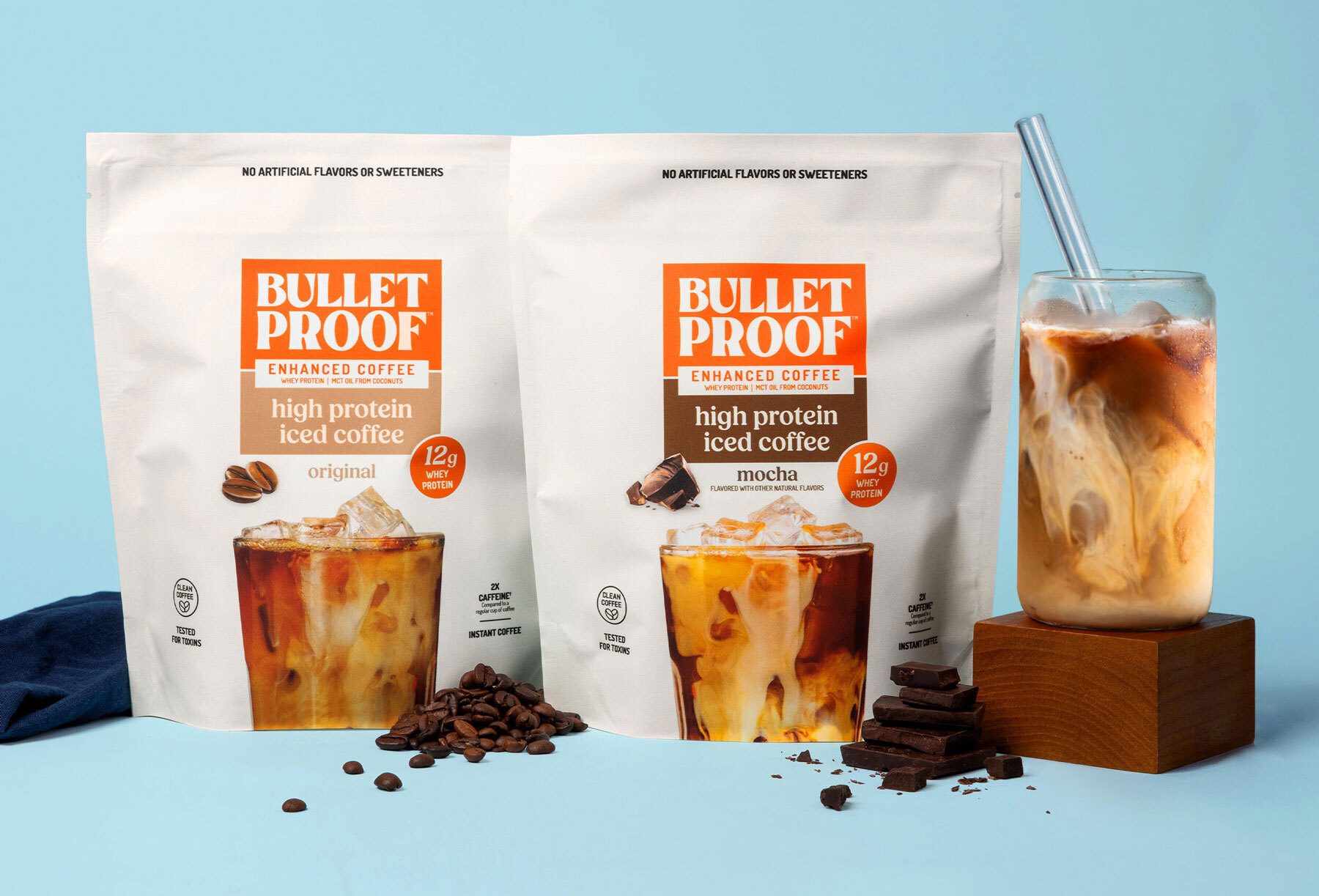
(Image courtesy of Bulletproof)
Innova’s report also examines how coffee trends are influencing the global food and beverage market.
According to the report, one key factor is that iced coffee trends lag hot coffee.
“Unlike hot coffee, iced coffee consumption is not linked to a particular part of the day or occasion. Nineteen percent of U.S. consumers drink iced coffee at least once a day, and most view it as an occasional beverage or a ‘me time’ treat,” it states. “Therefore, iced coffee trends indicate the opportunity to promote more versatile applications for iced coffee. Iced coffee may also be seen as a seasonal beverage. In contrast, hot coffee consumption remains consistent across seasons, despite its status as a hot drink.”
When it comes to growing price sensitivity, the report notes that the biggest challenges for brands will be to keep up with coffee demand and keep prices reasonable as environmental changes and tariffs threaten coffee supply from various angles.
According to Innova’s research on coffee trends, consumption of hot coffee has remained consistent for 67% of U.S. consumers during the past 12 months; however, price sensitivity will be important to shaping innovation and brand strategy, it says.
Additionally, increased prices could impact future iced coffee trends and growth, according to the report. “Thus, iced coffee brands can either position themselves against bigger luxuries or consider expanding their portfolio to include other products or coffee alternatives, as diversity will be increasingly important to brand resilience,” it states.
As far as generational differences in iced coffee trends, Innova’s report notes that millennials remain devoted consumers in the United States, with 23% drinking iced coffee one or more times a day. Additionally, interest in iced coffee is on the rise with 15% of Gen Z drinking the beverage at the same frequency as their millennial counterparts, it says.
“Because iced coffee faces competition from matcha, energy drinks, and soda in the category, brands should present competitive sets that also include non-coffee products. Limited-time offerings could provide opportunities for brands to target the expanding Gen Z consumer base, as younger generations look for innovative brands or flavors,” the report suggests. “When it comes to hot coffee, espresso-based beverages are also gaining momentum with young consumers. Customization and a wide range of options also engage with the desires of younger generations that find personalization appealing.”
Another point of contention in how iced coffee and hot coffee is perceived lies in the way women versus men engage with coffee trends. Although one-third of consumers overall are increasing their iced coffee consumption, women and men view coffee differently, hence brands should consider these different perceptions when engaging with innovations, Innova’s report notes.
“Innova’s coffee trends research highlights that men are less likely than women to indulge in iced coffee as part of ‘me time,’ and over half of female consumers value taste and flavor as the top consideration that influences purchasing decisions when buying iced coffee,” it states. “Therefore, they are looking for flavor innovation from iced coffee and are open to products drawing from indulgent treats. Although iced coffee might be a treat, it is still a separate category than desserts, underscoring the importance of ensuring that products are not overly indulgent.”
The report adds that for men, coffee consumption is increasing more than women, and for them, awareness is key.
“Thirty-two percent of men have increased their consumption of iced coffee, due to greater awareness of products and brands within the category,” the report states. “Health claims are also important to men. Moreover, positioning iced coffee as beverages outside of the home could positively impact consumption for males, such as at sporting events or concerts.”
Alongside novelty and flavor innovation comes the rise of functional ingredients in U.S. coffee trends, Innova’s report notes.
“Across various coffee formats, added protein is an opportunity to target health-conscious consumers,” it states. “In the U.S. market, 58% of consumers are actively seeking methods to incorporate protein into their diets. Therefore, beverages, such as coffee, that are consumed daily can offer an easy way to increase protein intake. Shakes, coffee sachets, and coffee pods are some formats that many U.S. brands are capitalizing on for added protein benefits.”
Further, during uncertain times, consumers say they are drawn to mood-enhancing flavors to uplift or calm them, according to the report.
“Therefore, brands can look to ingredients that support consumers’ emotional wellness,” it says. “For instance, adaptogenic mushrooms can help boost coffee’s natural associations with energy. Other brands position mushroom coffee as enhancing focus and as alternatives without the jitters associated with coffee.”
As far as what’s next for U.S. coffee and iced coffee market trends, Innova’s report points out that due to rising prices and climate change, coffee substitutes and coffee blends are growing coffee trends.
“Furthermore, new cultivation methods will emerge, due to increased temperatures. Brands can expect that collaborations will continue between unexpected brands, and barista-worthy at-home trends will influence the category, especially with aesthetically pleasing creations fit for social media sharing,” it concludes.
Two icons, one frozen treat
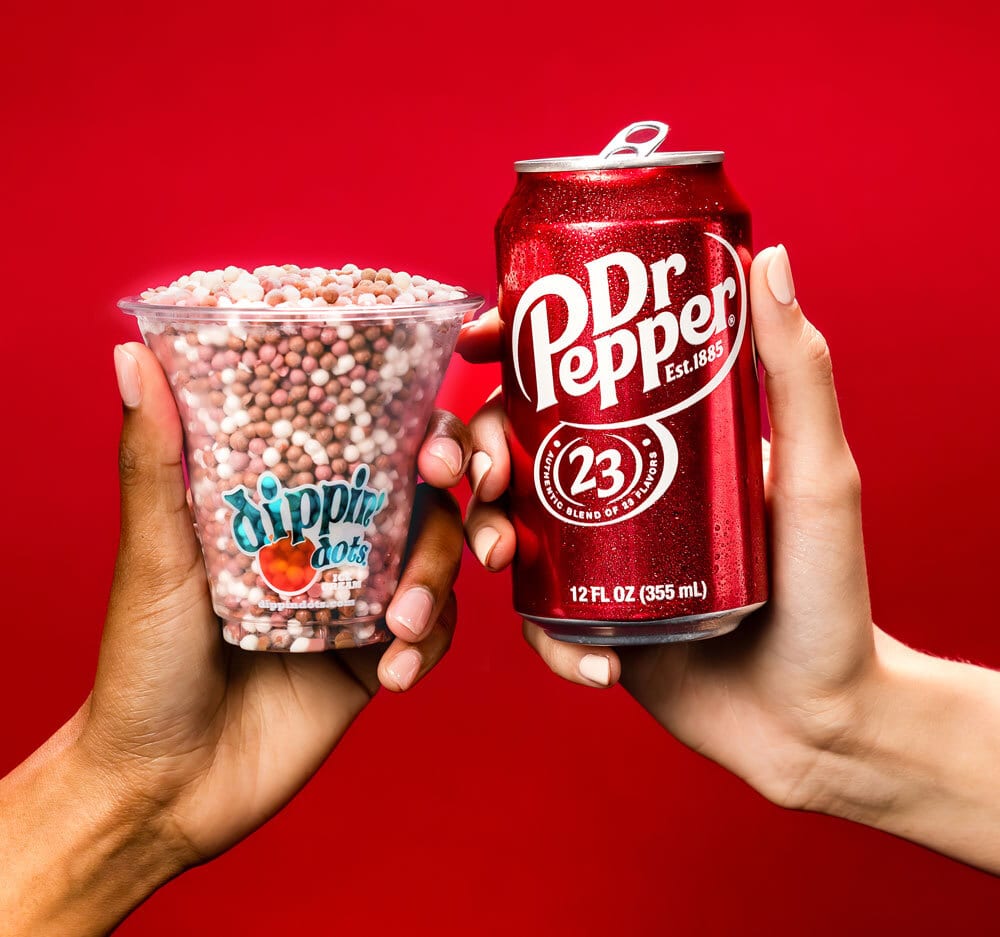
For the first time in its nearly 40-year history, Dippin’ Dots will share its name with another brand, and it is not just any brand. The original beaded ice cream has joined forces with Dr Pepper to launch Dr Pepper Flavored Dippin’ Dots nationwide. Dr Pepper Flavored Dippin’ Dots debuts as the newest addition to the lineup, bringing the bold flavor of Dr Pepper to fans year-round, it says. “Dr Pepper fans come from every walk of life, but they are bonded by their love for a one-of-a-kind taste,” said Brad Rakes, vice president of brand marketing at Keurig Dr Pepper, in a statement. “Thanks to Dippin’ Dots, they can experience that flavor in a whole new way.” Lynwood Mallard, chief marketing officer at J&J Snack Foods, owner of Dippin’ Dots, added: “Dippin’ Dots and Dr Pepper are brands that play by their own rules. This is the first time Dippin’ Dots has teamed up with another brand to debut a new flavor innovation. It’s more than just a brand mash up, it’s a one-of-a-kind collaboration between two unique brands that thrive on originality.” Dr Pepper Flavored Dippin’ Dots will debut in early 2026 at participating Dippin’ Dots retail locations, theme parks, entertainment venues and more nationwide.
Salma Hayek Pinault returns as Kahlúa’s leading lady
Academy Award nominated actress, producer and director Salma Hayek Pinault is returning to the Kahlúa spotlight, this time with a caramel twist swirl. Starring in the liqueur’s brand newest campaign, Kahlúa’s leading lady helps to spotlight the newly released Kahlúa Dunkin’ Caramel Swirl Cream Liqueur, which isn’t Kahlúa or Dunkin’, it’s Kahlunkin’, the company says. Directed by Rodrigo Valdes and created by Wieden + Kennedy London, the new It’s Kahlunkin’ campaign is quintessentially Kahlúa: bold, playful, and just a bit extra, it adds. “When we started working with the amazing Salma Hayek Pinault two years ago for our Stir Up campaign, it kicked off our vision to make Kahlúa the world’s most dramatically playful spirits brand. With It’s Kahlunkin’, we’re taking that energy up a notch — stirring up the cream liqueur category with a splash of drama and a whole lot of playfulness,” said Craig van Niekerk, global vice president of marketing for Kahlúa, in a statement. “Partnering with Dunkin’ was a perfect match. The spot combines their iconic brand of humor with our telenovela-inspired, over-the-top spirit.” Hayek Pinault added: “It was such a joy to celebrate moments of connection with Kahlúa once again, plus a wink of Dunkin’ humor along the way. I think people will feel the energy and playfulness we felt while shooting.” Kahlúa Dunkin' Caramel Swirl Cream Liqueur is available at retailers nationwide.
Brugal Rum unveils ‘Passion’ inspired brand campaign
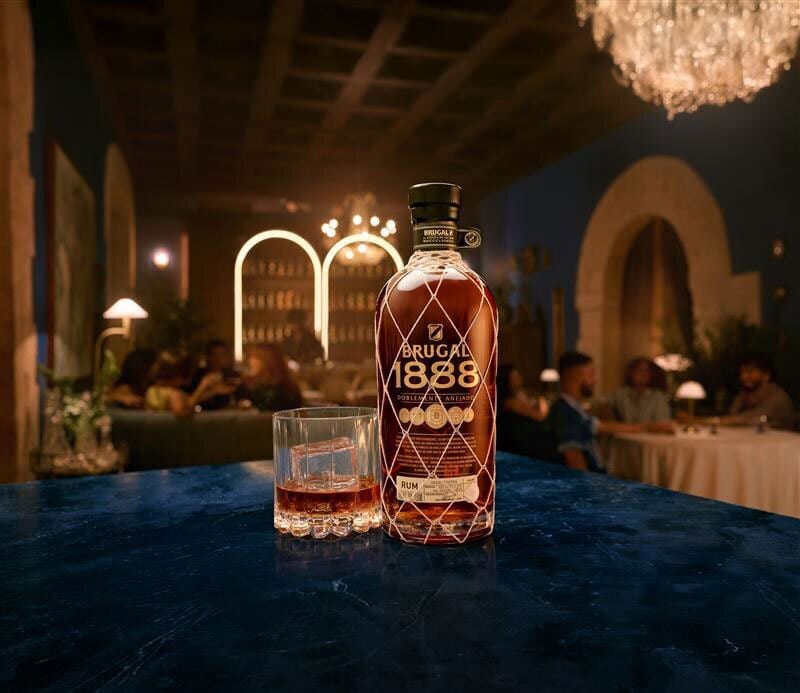
Brugal Rum has entered a new creative chapter with a new brand campaign. At the heart of this campaign is a simple yet powerful truth: Passion is what sets us apart, and passion is what brings us together, the company says. Through striking visuals that reflect a deep commitment to rum mastery this campaign celebrates the passion that has guided Brugal’s hands and hearts since 1888, setting Brugal apart, one bottle at a time, it adds. “In every cask there is a story, and we hope to share ours, our passion for rum, with the world,” said Jassil Villanueva Quintana, Brugal’s fifth-generation rum master and second-great granddaughter of Brugal’s founder Andres Brugal, in a statement. “I’m inspired by my family of Rum Masters who came before me, and together our passion for our craft ensures that every blend is a careful composition of the finest hand-picked casks and aged rums, balanced to perfection. Our rum is more than just a spirit, it’s a bond shared between family, maestros and community. Every bottle is a story of unity, dedication and care that’s meant to be enjoyed together.” The campaign launched in the United States with a multi-channel strategy designed to maximize visibility and drive deep consumer engagement — all directing consumers to an immersive landing page where they can explore the story behind Brugal and its exceptional rum, it says. Gregory Cozzolino, marketing director of breakthrough brands at Edrington, added: “Brugal is so much more than rum. It is a family business, it is a commitment to legacy, and rum mastery. This campaign allows us to share with the world what sets Brugal apart.”

Forty percent of global consumers say they’re being cautious even as inflation cools.
According to NielsenIQ’s (NIQ) “Consumer Outlook: Guide to 2026,” today’s consumers are spending intentionally, rewarding retailers and brands that deliver trust, personalization, and convenience.
“Clean label products in the U.S. are growing at a rate of plus 7.5% this year, compared to the plus 5.9% overall U.S. FMCG average, proving that transparency and simplicity drive loyalty,” the report states. “Trust is now a key differentiator, with 95% of consumers saying that trust is critical when choosing a brand.”
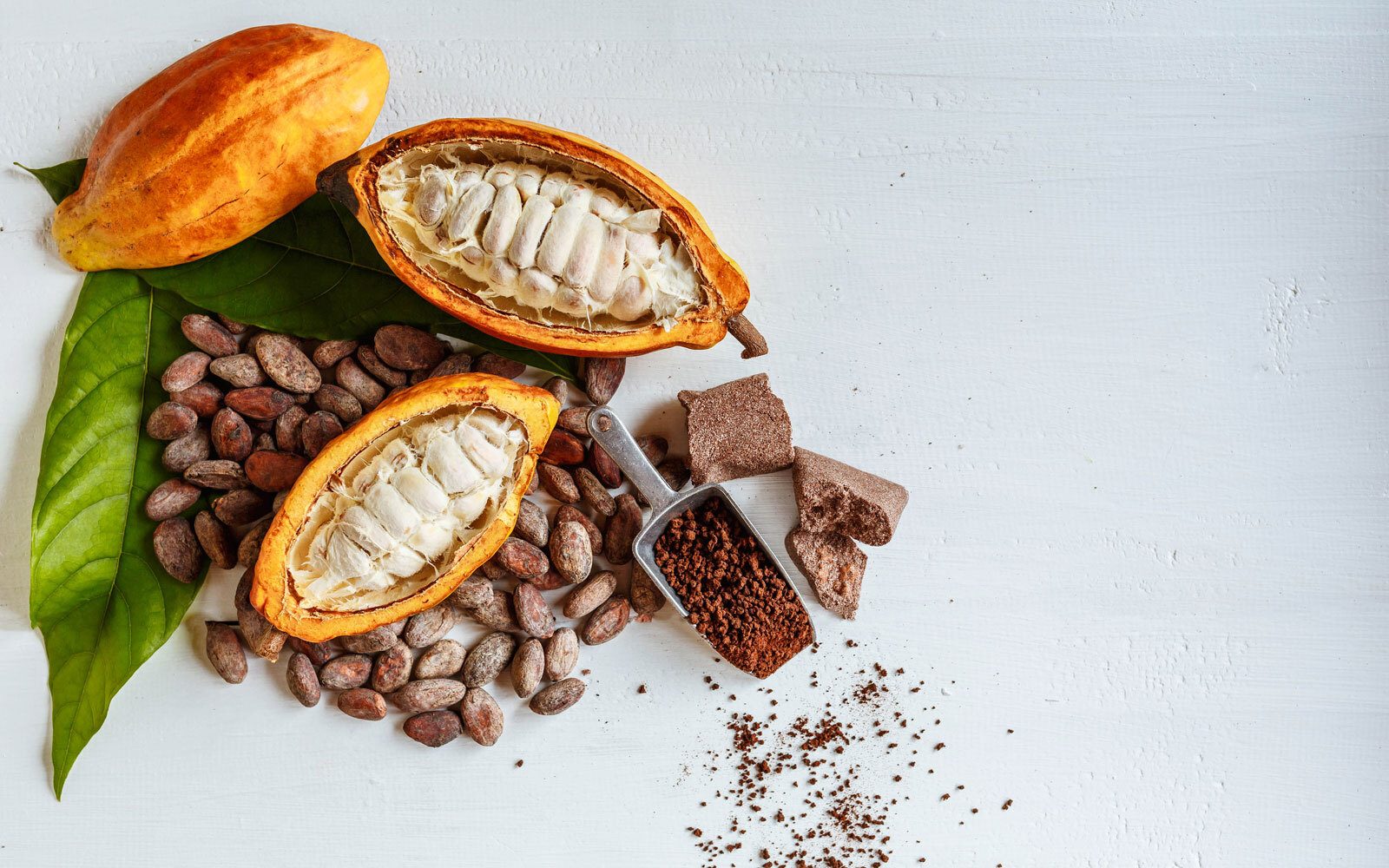
Further, inflation remains a global consumer concern, especially around rising food prices and a potential economic downturn, according to NIQ. In addition, commodity volatility is adding pressure to brands, it notes. Coffee prices increased 26.9% between 2024 and 2025 while cocoa prices increased 127.9% between 2023 and 2024, it states.
“Growth for brands depends on volume — capturing trips and baskets through sharper product assortment, innovation, and private label offerings that stretch limited discretionary dollars further," said Marta Cyhan-Bowles, chief communications officer and head of global marketing at NIQ, in a statement. “Despite growing consumer caution, brands can win loyalty by building trust and offering value beyond price.”
Did You
Know?
(Image by Narong KHUEANKAEW/iStock / Getty Images Plus via Getty Images)