Wine & Spirits
Bottled water
2026 state of the industry
Preference shifts impact spirits, wine markets
Premixed cocktails lift spirits market, while wine seeks to find new footing
By Jessica Jacobsen
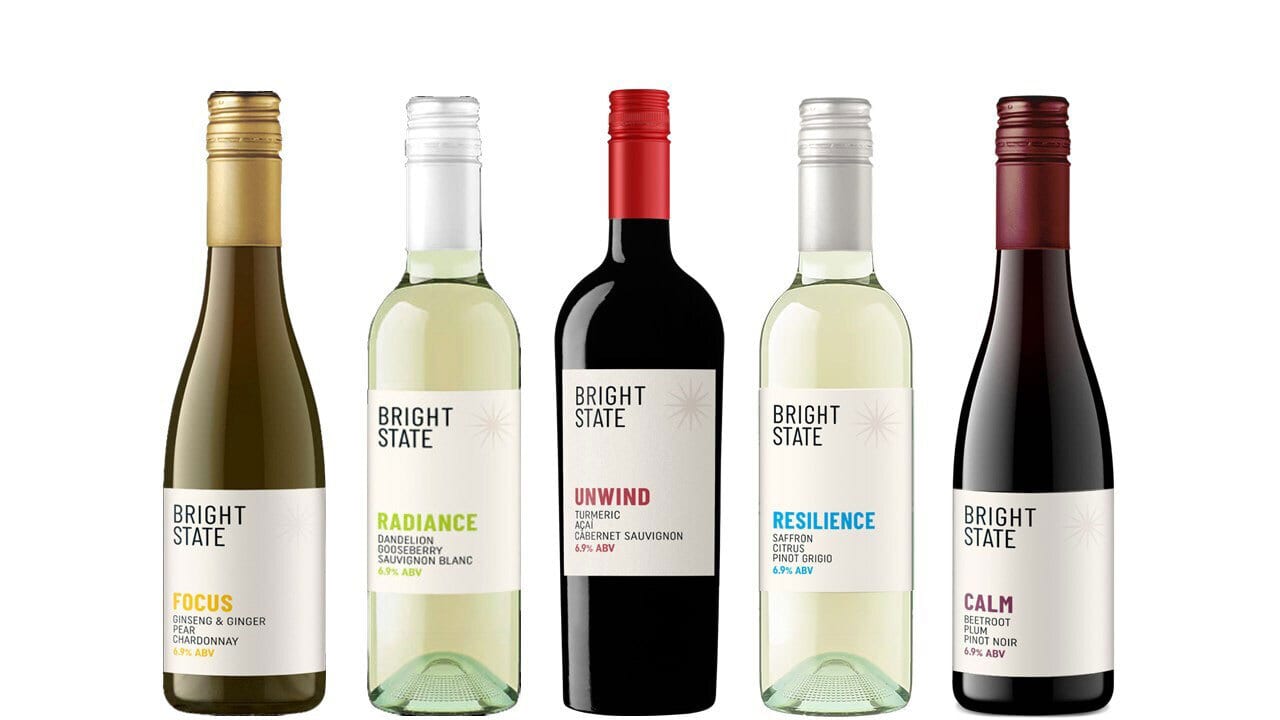
(Image courtesy of Bright State)
When it comes to the spirits market, experts note that the category is facing new challenges and trends to keep up with, as the market landscape has shifted.
“2025 was a more challenging year for spirits,” said Mitch Madoff, head of retail partnerships at Keychain, New York, in Beverage Industry’s April issue. “After several years of steady premium-driven growth, the market felt real pressure from inflation, tighter consumer budgets, and a shift in consumer behavior, as more people chose to reduce or eliminate alcohol altogether.”
Yet, Madoff noted that ready-to-drink (RTD) cocktails showed strong growth in the past year despite broader industry challenges.
“Their variety of flavor options and on-the-go convenience align with younger consumers who are seeking flavorful, lower-sugar, lower-carb options that match their functional and better-for-you preferences,” he said.
Brian Sudano, CEO of S&D Insights LLC, Norwalk, Conn., described in Beverage Industry’s April issue the U.S. spirit market’s performance in the past year to be a “tale of two markets.”
“RTDs grew by about 20% in volume in 2025 while traditional spirits declined by around 6%,” he said. “Combined total spirits grew at around 1% as RTDs continue to gain share of total spirit volume. On a dollar basis, the spirit market declined near 3% as traditional spirits are more premium priced than RTDs.”
However, more recent data suggests the spirits category could be on an upswing. According to data from Chicago-based Circana, spirits dollar sales were nearly $14.3 billion, a 3.1% increase, for the 52 weeks ending April 19 in total U.S. multi-outs. Additionally, case sales were up 8.1% during that timeframe.
Yet, the data suggests that the tale of two markets is continuing. Premixed cocktails and cordials were the only spirits markets to post dollar sales growth. In terms of volume, one additional market was flat. The remaining spirits categories saw case sales in decline.
Premixed cocktail sales totaled $2.7 billion, a 39.8% increase, while case sales were up 44.3%. Cordial sales totaled $845 million, a 1.8% increase, while case sales increased 0.8%. Although tequila dollar sales were down 1.4% (just shy of $1.6 billion), volume was unchanged from the previous year.
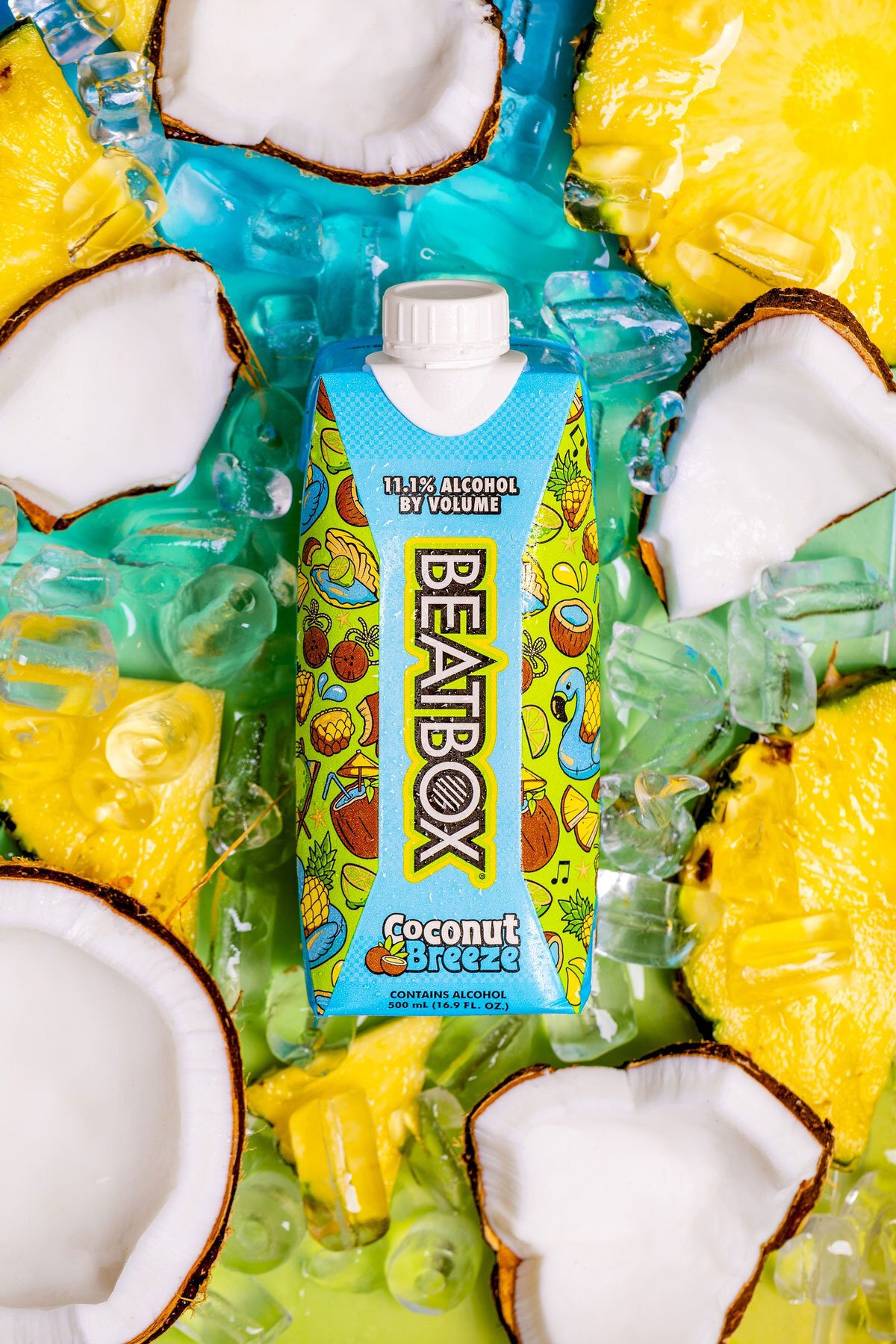
(Image courtesy of BeatBox Beverages)
In Beverage Industry’s April issue, Kaleigh Theriault, director of BevAl thought leadership at NielsenIQ (NIQ), Chicago, noted that the premium mindset is still strong with consumers but looks different from just growth in spirits price tiers.
“Consumers are opting for premium drinks, but less volume of drinks, as well as premium experiences in bars and restaurants,” she explained. “Premiumization is still a key theme: premium-plus (premium, super prem, ultra prem, and luxury) spirits make up 70% of spirits dollars (including RTDs). It’s increasingly supported by RTDs and ‘right-sized’ formats that make premium feel more accessible.”
S&D Insights’ Sudano explained that as economic pressure penetrated consumer purchase decisions, some trading down has occurred in the market.
“This is best demonstrated through volume shifting to RTDs,” he said in Beverage Industry’s April issue . “However, traditional spirits premiumization has muted.”
Meanwhile, Keychain’s Madoff said that despite economic pressures, consumers haven’t abandoned premium spirits but just are more selective about them.
“While overall alcohol consumption volume is down, many folks are reserving premium purchases for specific occasions, opting for quality over quantity,” he explained. “For consumers who are moderating their alcohol intake, that often means choosing higher-quality, more expensive options for the few occasions where they do indulge in spirits.”
Alongside consumer trends, the sober curious movement is having an impact on the market, experts noted.
“Wellness-driven lifestyle shifts and broader conversations around moderation and sobriety are changing how consumers approach alcohol,” Keychain’s Madoff said in Beverage Industry’s April issue. “Younger consumers are reducing their alcohol intake frequency and exploring non-alcoholic alternatives. On Keychain, non-alcoholic beverages saw explosive momentum last year, with 92% year-over-year growth.
“This ties back to the premiumization trend we’re seeing; as consumers drink less often, they’re upgrading to higher-quality spirits when they do indulge, and seeking equally sophisticated non-alcoholic options when they don’t,” Madoff continued. “Retailers and supermarkets around the country are expanding shelf space to meet that demand, and even legacy alcohol brands like Heineken and Budweiser have introduced alcohol-free lines to capture the sober-curious consumer.”
NielsenIQ’s (NIQ) Kaleigh Theriault, however, noted that non-alcohol (NA) spirits remain relatively small in off-premise but have continued on the upside for cocktails on menus in bars and restaurants.
“Non-alcohol beer/wine/spirits surpassed $1.01 billion in off-premise sales (up 19.2%), showing moderation is growing,” she said in Beverage Industry’s April issue. “Importantly, 95% of non-alcoholic buyers also buy alcohol, so it’s often a complement, not a replacement.”
S&D Insights’ Sudano explained that the sober curious movement had gained momentum prior to 2026; yet, he noted that beverage alcohol grew in early 2026 versus strong declines in 2025.
“Although NA spirits have been experiencing strong double-digit growth, it remains a very small part of the category at around half a percentage point versus NA beer, which is greater than 1% of beer,” he explained in Beverage Industry’s April issue.
Despite the mixed performance for the spirits market, the U.S. wine category experienced more challenges.
According to data from Circana, table wine dollar sales were nearly $12.4 billion, a 4.7% decrease, for the 52 weeks ending April 19 in total U.S. multi-outs. Additionally, case sales were down 5.2% during that timeframe. Sparkling wine/Champagne did not fare much better. Dollar sales were just shy of $2 billion, a 2.1% decrease, while case sales were down 2.4%.
In Beverage Industry’s February issue, Nathan Greene, senior consultant at S&D Insights LLC, described that 2025 remained a difficult period for the wine market in the United States, with both volume and sales declines persisting at an outsized level to any other recent period since 2021. Many of the headwinds expanded their impact recently, Greene noted.
“Total U.S. wine volume declined 3.3% in 2024, accelerating to [greater than] 5% declines in 2025 1H, per S&D’s internal tracking, and is anticipated to have completed 2025 down an estimated 4.75%,” Greene shared in Beverage Industry’s February issue. “Contributors to this outcome range widely, but the greatest drag is among value and mainstream table wines, especially imports, which has been exacerbated by tariff activity, much of which, at least on the consumer pull side of market activity, results from an overall reduction in relevance and interest in wine and wine culture by younger American consumers.”
As S&D’s Greene noted, inflation and tariffs impacted the wine market. Greene said this influence has been extensive, with nearly 30% of table wine and more than 50% of sparkling wine consumed in the U.S. is historically imported, and both had been seeing share gains prior to trade policy impacts in 2025.
“Similar to the macro market headwinds surrounding lower priced/positioned products, those imports expressions have again been hit the hardest, potentially making their value proposition a non-starter at elevated price points and/or reduced margins,” he explained. “Additionally, prior to 2025, imported sparkling wine was the most promising of scaled growth areas for the category overall, leading to outsized macro impacts as sales suffer. Within the market, the impact has been both tariffs themselves and ongoing uncertainty of their scope and length holding back future decision-making/initiatives, especially for European Union (EU) products.”
Although not as pronounced as domestic sales impacts, Greene said in Beverage Industry’s February issue that the export market for U.S. wine has been affected as well.
In her report, NIQ’s Theriault noted that consumers were feeling more challenged in 2025, considering 72.5% of consumers to be vulnerable consumers as of July 2025.
S&D’s Greene noted that among the different segments of wine, some have performed better than others.
“Super-premium and luxury segments have been able to buck overall market performance in specific industry pockets, especially those products with limited quantities and clearcut differentiation,” he stated. “Industry stakeholders have pointed to products selling at about $40 per bottle seeing the strongest performance, and those from desirable terroirs such as Napa, Burgandy, etc. This highlights the consumer divide within the category that has grown in recent years.”
Still, many consumers do not consider wine much or at all in consumption/purchasing behaviors, Greene noted, yet those that do are deeply engrossed in seeking out unique, quality or renowned wines.
Shifting consumer drinking patterns also are impacting the wine category, experts note.
“Wine is experiencing the brunt of declining U.S. beverage alcohol market both on an absolute and even more pronounced servings/per capita basis,” S&D’s Greene said in Beverage Industry’s February issue. “While traditional beer and spirits performance has also suffered, traditional wine’s declines are outsized to its peer categories. The category is often macro viewed as inaccessible due to a high learning curve for consumers.”
Since the pandemic, Greene noted that consumers have consistently viewed the market value proposition to have worsened, especially in the on-premise, where mark-ups relative to retail can exceed 10 times.
“Additionally, the expansion of major wine and spirit distributors/suppliers into competing and growing segments, particularly spirit RTDs [ready-to-drink], lessens overall RTM focus on wine growth, e.g., Gallo with High Noon, SGWS expanding into beer,” Greene added.
NIQ’s report notes that 79% of the buyers of non-alcohol wine also are purchasing wine that contains alcohol.
Moreover, experts share how younger legal drinking age (LDA) consumers are engaging with the wine market.
S&D’s Greene said that LDA consumers are not engaging with the category much.
“Young consumers seek accessible, yet discerned products without the legacy baggage preceding generations have imbued onto them,” he noted. “The wine industry successfully developed the interested and loyalty of baby boomer and Generation X consumers through travel and lifestyle occasions, wine clubs, gastronomy, etc. Now as millennials are cemented as a core consumer cohort with necessary disposable income, and Generation Z reaches adulthood, these connotations are easily rebelled against, leading to disinterest in wine.”
This is not to say that all younger LDA consumers are not participating in the category in-masse, Greene explained, but instead, they are not to the extent or consistency to offset losses of older generations as they exit and/or reduce their own consumption.