Between Drinks


The magic of honey
In a recent “Global Market Honey” report by Mordor Intelligence, the market research firm notes that the honey market size was valued at $11.56 billion in 2025, and expected to reach $14.98 billion by 2030, growing at a compound annual growth rate of 5.32%.
Yet honey’s market size isn’t the only facet that makes this ingredient so magical, according to the National Honey Board (NHB).
During its first Honey R&D Summit of the year, which took place online Jan. 27, Keith Seiz, ingredient marketing representative for NHB, pointed out that honey is not just a typical sweetener, but a functional dynamo.
“Whenever we think about honey as an ingredient, we have to kind of think about something that is more than just something that’s used in a product,” he says. “If you look at all the ingredients that you use in your products, all of them will have some kind of story but very few of them will have a story like honey.
“Yes, honey is a great sweetener,” Seiz continues. “But whenever we talk about honey, we’re not only talking about a sweetener, we’re talking about its functional role in products.”
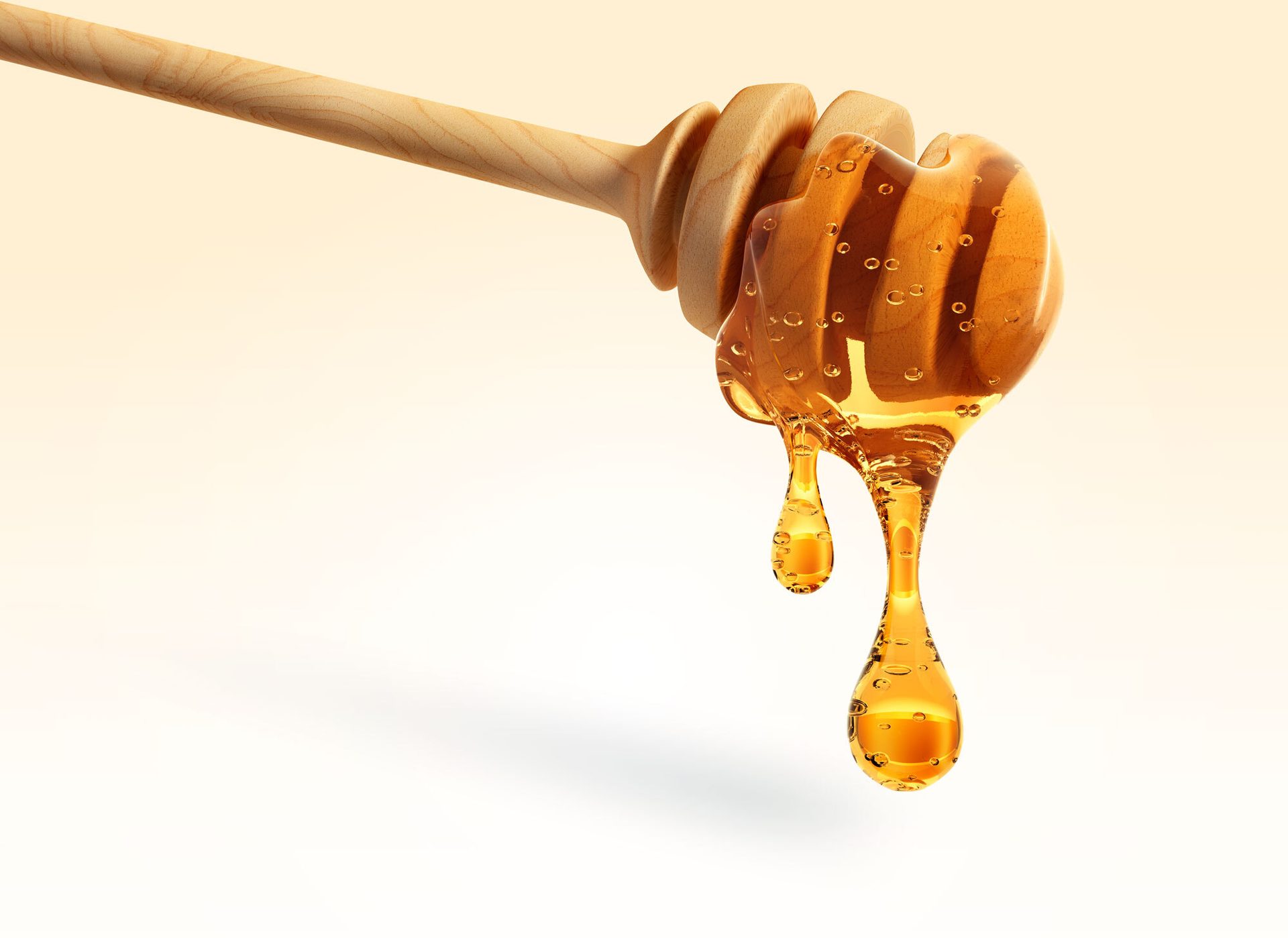
(Photo by peterschreiber.media/iStock / Getty Images Plus via Getty Images)
Using the example of ready-to-drink (RTD) coffee, specifically Bee Keeper Coffee, Seiz highlights honey’s unique characteristics and what the ingredient can bring to beverage formulations.
“[I]n this product right here, it’s your kind of typical coffee sweetened with caramel as well as honey,” he notes. “So why honey works in a product like this and why it’s unique is yes, it adds that unique flavor but it also is contributing dissolved solids. … [W]hat that means is it’s going to give it some sort of mouthfeel. It’s going to make the drink feel more rounded and substantial.”
Seiz notes that beyond coffee drinks the board has been working on other non-alcohol offerings.
“Honey will give you something that kind of echoes a full alcohol drink, but since it’s the honey, that’s what’s providing the body,” he says. “So, in this one, it’s doing the same. It’s providing that more mouthfeel of the product. It’s also kind of helping modulate the bitterness as well as giving a flavor.”
Seiz further notes that what is interesting about honey is its unique composition — more than 25 sugars, low water activity and pH 3.9 — enabling it to bind, retain moisture, reduce bitterness and brighten flavors.
Aside from honey’s functional properties, Seiz points to the ingredient’s popularity among food and beverage manufacturers and consumers alike — not overlooking its marketing benefits.
“For starters, it’s one of the most favorite ingredients across the food industry,” he says. “It’s a sweetener that parents love, kids love.”
Noting stats from 2024, Seiz adds that honey grew at a rate two times faster than the food industry as a whole. As far as consumption goes, he also noted that “honey appears on 60% of menus, so whenever you’re going out to eat, honey is everywhere.”
“If we look at per capita honey consumption, this is, you know, what honey consumption is at home, it increased 25% in 2024,” Seiz explains. “So, this is an ingredient that’s been around for thousands and thousands of years, and year-over-year growth was 25%. That’s pretty shocking. In food and beverage products, we saw a 15.3% increase in new products made with honey. … [I]n 2024, there were 1,366 new products with honey.”
Noting that he just ran the numbers for 2025 and hasn’t done a full analysis yet, Seiz estimated that new products grew even more than the previous year.
New products with honey were approximately 1,500, he says.
Adding that honey’s inclusion spans many categories, Seiz looks to answer why this legacy ingredient has seen such strong growth.
“If you look at that beehive, this is where honey is made,” Seiz says. “Humans don’t make honey, honeybees do. So, what you see with these little factories is they run on no power, meaning there’s no electricity going in there. There’s no wastewater going out. The only thing those little factories run on is sunlight and flowers. So, whenever we talk about honey, again, it’s more than a sweetener. It’s a completely sustainable product.”
Alongside its sustainable attributes, Seiz further notes that as a natural ingredient, consumers increasingly have responded to honey the past couple of years, calling attention to a 2024 Ipsos study which found that 95% of consumers view honey as natural.
Despite honey’s legacy, there’s still more to be done on educating consumers.
“One of the main things that people don’t know about honey is that honey is not just one ingredient,” Seiz says. “There’s more than 3,000 different varietals of honey, all based on where the honeybees forage for nectar.”
Nurri shakes things up with first consumer campaign
Nurri unveiled its first advertising campaign: Shake Ya Can. Launched in 2024, Nurri has quickly become a standout growth story — the brand already is available in key retailers including Costco, Sam’s Club, Walmart and Amazon, it notes. Nurri’s rapid success and plans for growth fueled its desire to bring on independent creative agency Curiosity as a strategic partner, the company says. Shake Ya Can aims to give Nurri a distinct and joyous personality, featuring a fun and eclectic cast of diner patrons and staff getting their groove on while fueling up with Nurri. The work was directed by Daniel Russell of production company ArtClass. “When I first heard the brief, I actually laughed, because in my early music-video days, I shot a lot of dancing,” Russell said in a statement. “This spot felt like the perfect full-circle moment. Nurri basically let me blend my music-video roots with a fun, irreverent commercial that isn’t afraid to push the line. I love that.”
Meet the Vodka that helps save pets in need
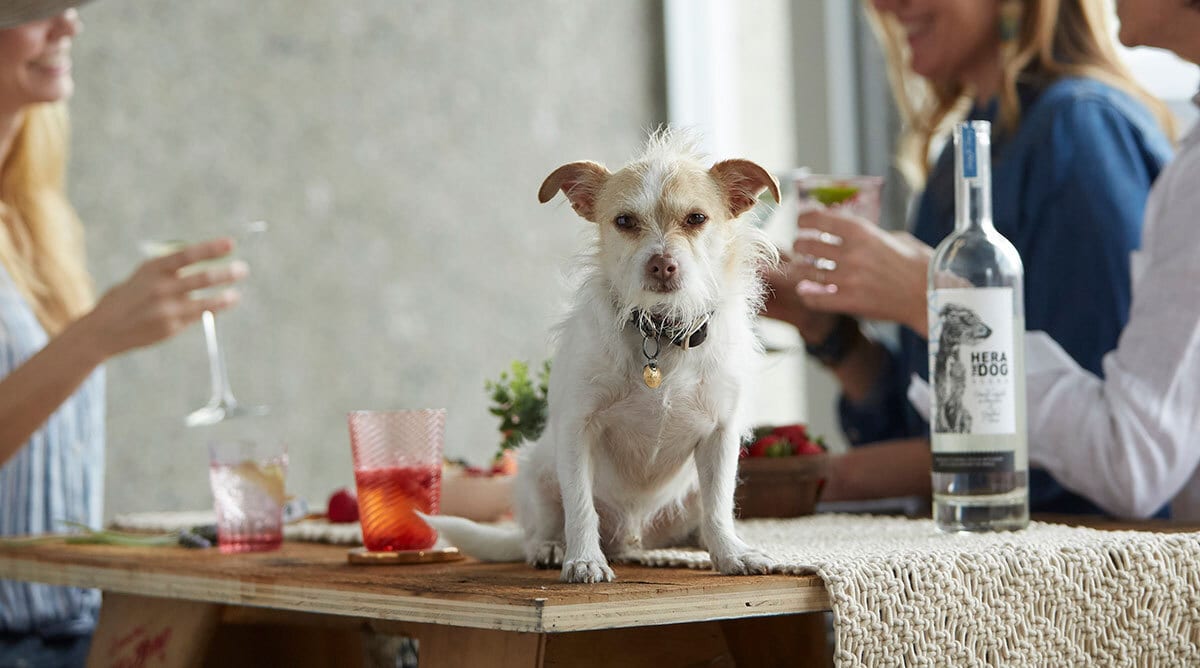
Hera The Dog Vodka, a spirit created specifically to raise money to help animals in need, is inviting consumers to sip with purpose. Every bottle sold directly helps to support grassroots animal rescues and their life saving programs, proving that cocktails and compassion can go hand in hand, the company says. Driven by this purpose, the company has set a goal to donate 50% of its profits to animal rescue efforts, it says. Founded by animal rescue advocate Julia Pennington, Hera The Dog Vodka blends premium vodka craftsmanship with social impact. “Our cause is not a marketing gimmick; our cause is the reason Hera exists,” Pennington said in a statement. “I wanted to create a more sustainable way to raise funds for the grassroots, boots-on-the-ground organizations I see making a difference, but constantly struggling to find support. Too often, when products give back, those donations are sent into the ether to very large, already well-funded organizations. People rarely see where their money actually goes. To me, how someone chooses to spend their money is personal, and I want our customers to not only to know where the donations go but to also truly experience the impact they make by choosing Hera.” Hera The Dog Vodka is available throughout Southern California, Nevada and Colorado at select premium retailers including Erewhon and Pavilions, as well as online platforms.
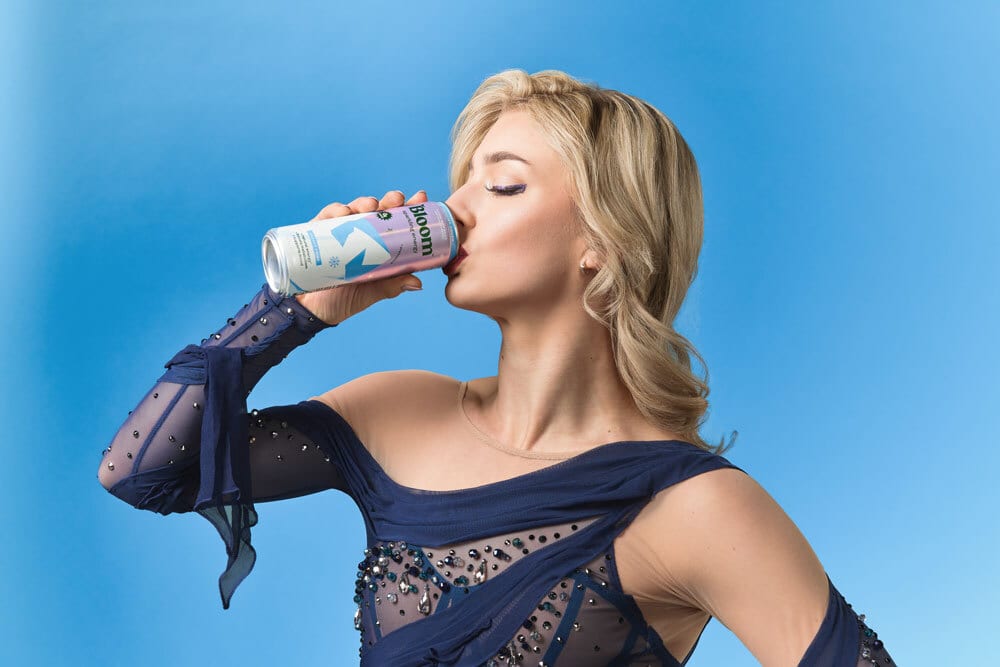
Bloom taps figure skater Amber Glenn for ‘high-energy’ campaign
Bloom Nutrition announced its first-ever athlete partner: Amber Glenn, three-time U.S. National Champion figure skater. Leading up to the 2026 Olympic Winter Games, Bloom teamed up with Glenn for a campaign centered around Bloom’s Glacier Crush Sparkling Energy, celebrating the kind of confidence and momentum it takes to train, travel, and show up fully both on and off the ice, it says. The campaign is live on Bloom’s socials and Amber’s socials. For Glenn, being a champion is about more than hours on the ice; it’s the energy you bring to every moment, from daily training to competition day, the company says. Bloom is there to help her crush her goals, both on and off the ice, it adds. As Bloom’s inaugural athlete partner, the collaboration is rooted in shared values around empowerment, creativity, and self-expression. A fearless triple axel aficionado with a strong eye for design and a passion for evolving the culture of figure skating, Glenn was intentional about choosing a brand that supports her creativity while empowering her to be her best self — and Bloom does exactly that, it says.

U.S. sales of beer, wine and spirits continue to fall as more Americans seek to moderate their alcohol consumption.
Yet, according to a recent report from CoBank’s Knowledge Exchange, non-alcohol beverages have proven to be one of the more resilient segments of the beverage industry and the market shows strong growth potential.
Rising sales have prompted traditional adult beverage manufacturers and new market entrants to sharpen their focus on non-alcohol beer, wine and spirits and increase their investments in the category, the company says.
“The trend toward non-alcoholic beverages and their rapid growth in sales is prompting considerable innovation in the space,” said Billy Roberts, food and beverage economist with CoBank, in a statement. “Beverage producers in the consumer-packaged goods space are introducing options with novel sensory experiences that can stand on their own, rather than simply mirroring alcohol-based counterparts.”
CoBank further notes that although beverage alcohol use continues to decline, cannabis consumption is rising and the market for cannabis-infused beverages shows significant potential. U.S. sales of cannabis beverages are projected to reach $2.8 billion by 2028, the company says, but that remains small compared to the U.S. market for beverage alcohol.
Nonetheless, CoBank’s Roberts noted that continued growth for beverage alcohol is likely, fueled by further advancements in flavor varieties and different formulations.
Did You
Know?
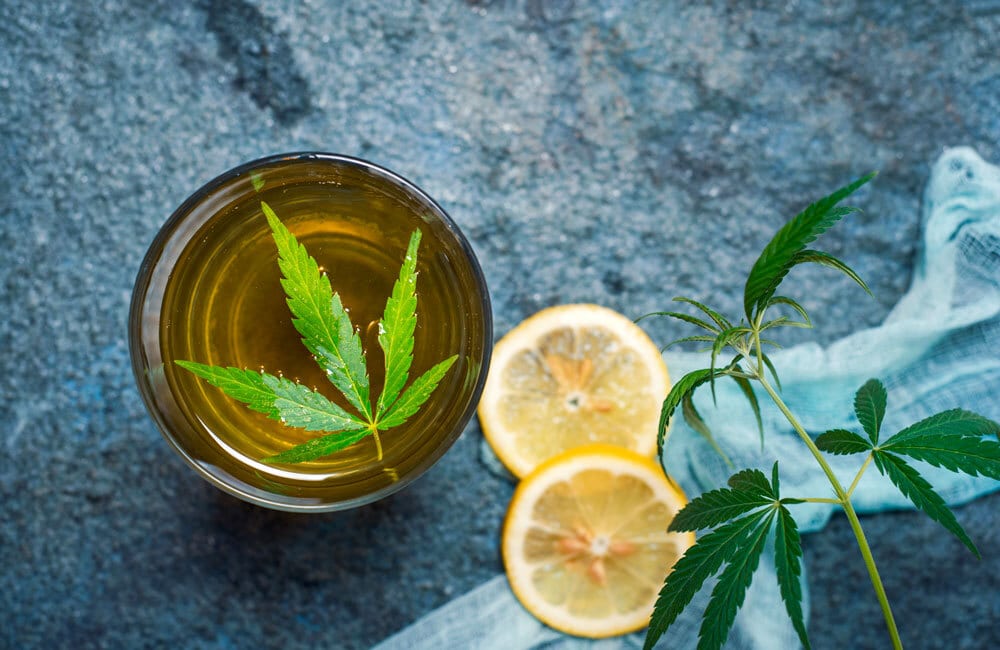
(Photo by Stefan Tomic/iStock / Getty Images Plus via Getty Images)