Beverage R&D
Eyes wide open
Beverage-makers remain focused on energy support, cognitive health
By Lauren Sabetta
(Image courtesy Accelerator Active Energy)
The idiom “still waters run deep” often is used to describe how a person’s calm exterior can conceal great depth of character, just as the deepest streams can have the smoothest surfaces.
Similarly, when it comes to describing the market for cognitive and energy support, experts note that the market’s sustained growth speaks to the depth of consumer demand and the essential role energy beverages now play in daily routines.
“Energy is one of the few beverage categories that continues to grow — and has done so repeatedly over the past five years despite inflation putting pressure on consumers,” says Emily Berg, marketing manager at Cargill, Minneapolis. “That’s especially notable given how mature the category already is.
“Energy remains one of the most sought-after functional benefits across demographics,” Berg continues. “According to the 2024 IFIC Food & Health Survey, it is the top benefit sought by Gen Z, millennials and Gen X, and the second-most sought benefit among boomers. Across age groups, consumers are looking for products that help them stay sharp, productive and energized throughout the day, driving strong demand for beverages positioned around sustained energy and cognitive support.”
Berg also points out that energy drinks are no longer just for extreme sports athletes, gamers or late-night study sessions.
“It’s attracting new consumers and new usage occasions — busy professionals, parents, commuters and everyday consumers who are simply looking for a small lift to get through their day,” she explains. “As a result, we’re seeing a wider range of products positioned around different need states, caffeine levels and benefit combinations, bringing entirely new audiences into the category.”
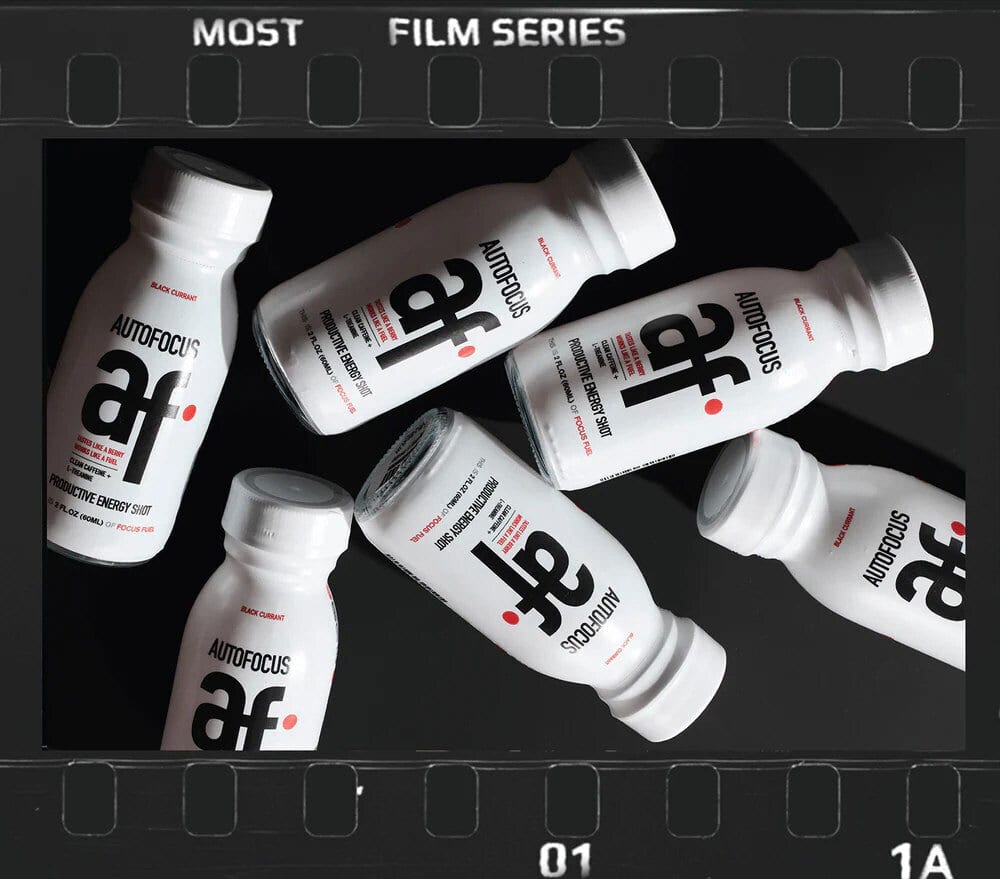
Productive Health Co. announced the launch of AUTOFOCUS, a functional beverage that pairs upcycled coffee fruit with l-theanine to help the body more evenly absorb caffeine for smooth, sustained energy, the company says.
(Image courtesy of Productive Health Co.)
Berg adds that innovation also is accelerating as brands look to differentiate.
“Many [brands] are leaning into ‘natural’ or plant-sourced caffeine, alternative energy sources or varying caffeine levels to address different day-part needs,” she says. “These approaches are creating new niches within the broader energy space and helping the category continue to expand.”
Kyle Krause, regional product manager of functional fibers and carbohydrates for North America at BENEO, Parsippany, N.J., attributes consumers’ growing awareness of the gut-brain axis as driving growth in the market.
“Consumers have become increasingly aware of the link between gut health and cognitive function — for instance, four in 10 global consumers agree that mood and mental health are impacted by digestive or gut health,” he says. “It is no surprise that prebiotic-infused beverages — such as prebiotic sodas or prebiotic-enriched shakes — are on the rise, aiming to foster a healthy gut and potentially mental well-being.
Krause also notes that with more than half (56%) of global consumers being concerned about tiredness and lack of energy, natural energy sources are high in demand.
Moreover, with busy lifestyles becoming the new normal, Krause says that almost six in 10 global consumers are interested in products that offer sustained energy specifically for the brain to keep alert or mentally active.
Cargill’s Berg echoes similar sentiments.
“Consumers are juggling packed schedules and looking for convenient solutions like energy drinks that can help them power through busy, on-the-go routines,” she says. “At the same time, there’s a cultural shift toward self-optimization. Consumers are looking for ways to enhance focus, clarity and mental performance.
“Balance is another important dynamic,” Berg continues. “Consumers want energy that helps them stay focused without disrupting sleep later in the day. That’s creating opportunities for more thoughtfully designed formulations and products targeted to different dayparts — whether that’s a lighter morning boost that avoids the caffeine ‘jitters,’ sustained afternoon focus, or a gentler late-day pick-me-up that won’t interfere with rest.”
Vaughn DuBow, senior director of product portfolio marketing and health and wellness at ADM, Chicago, notes that, beyond everyday energy and focus, consumers also desire beverages tailored to cognitive health with the goal of aging well.
“Plus, as a large share of the global population rises over the age of 60, the focus on healthy aging with an emphasis on cognitive health is anticipated to increase,” he says. “This includes supporting brain function and memory along with energy levels to maintain a healthy, active lifestyle for as late in life as possible.”
Market influencers
Broader consumer trends also are intersecting in the cognitive and energy space, including label priorities, sugar reduction and the desire for multifunctional benefits, experts note.
“Consumers want products that do more — with minimal or no added sugars or artificial ingredients — and beverages are increasingly expected to multitask,” Cargill’s Berg says. “Cargill has demonstrated how these trends can come together with a stevia-sweetened, orange-flavored energy drink concept. With 100 mg of caffeine per serving, it provides a lift to help consumers power through their day, but there’s no added sugars or artificial sweeteners to weigh them down. Best of all, it tastes great, without the flavor challenges so often associated with beverages in this space.”
Consumers also are looking for beverages that feel purposeful, Berg explains.
“If a drink can provide hydration, energy and an added benefit like immune support, gut health or protein, it feels like a smarter choice,” she says. “That ‘life-hacking’ mindset is shaping how brands think about formulation and positioning.”
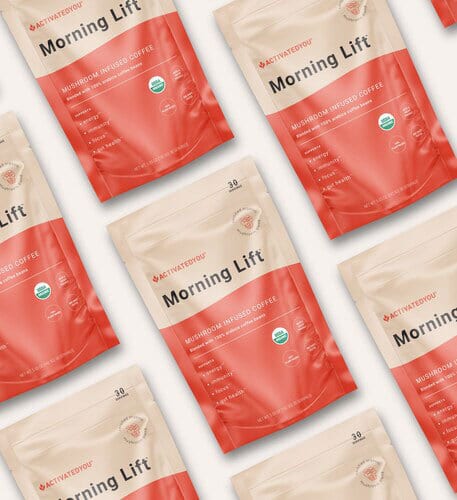
ActivatedYou recently unveiled Morning Lift, an instant coffee infused with six mushroom extracts, organic superfoods, and natural MCTs to deliver smooth, sustained energy without the jittery crash of traditional caffeinated beverages, it says.
(Image courtesy of ActivatedYou)
BENEO’s Krause points to consumer interest in weight management — spurred on by the weight loss results shown by GLP-1 medications — as contributing to the demand for these formulations.
“With GLP-1 drugs suppressing appetite, it’s important not to lose sight of the value of a high-quality diet,” he says. “Proper nourishment is crucial, as lacking nutrient intake can result in reduced physical and cognitive stamina.
“BENEO’s toolbox, consisting of functional carbohydrates, prebiotic fibers and plant-based proteins, enables manufacturers to bring products to life that meet the specific needs of GLP-1 users, contributing to a proper supply of macronutrients,” Krause continues. “Foods and drinks containing these important high-quality ingredients can play a significant role in accompanying the GLP-1 weight management journey.”
Krause further notes that GLP-1 users likely are on the lookout for products that improve their mood, as studies show that GLP-1 medications have the potential to increase depression.
“Through the gut-brain axis and by increasing beneficial bacteria in the gut, chicory root fibers can be part of a toolbox to improve mood and reduce feelings of anxiety and depression,” he says.
“Many [brands] are leaning into ‘natural’ or plant-sourced caffeine, alternative energy sources or varying caffeine levels to address different day-part needs. These approaches are creating new niches within the broader energy space and helping the category continue to expand.”
– Emily Berg, marketing manager at Cargill
Meeting formulation challenges
When fortifying beverages with cognitive-enhancing and energy ingredients, many of the functional ingredients that star in these beverages come with undesirable flavor and sensory characteristics, experts note.
“The two main formulation challenges when creating functional beverages include maintaining efficacy of functional ingredients and mitigating impact to the sensory experience,” ADM’s DuBow says.
“Conventional probiotics must be refrigerated and cannot survive through tough formulation environments like high heat or high-water content,” he continues. “However, postbiotics do not contain live microorganisms, making them much more resilient. Postbiotics, such as our ES1 and L. gasseri CP2305, withstand these conditions and retain efficacy throughout formulation and shelf life.”
DuBow also notes that ingredients can degrade over time due to light or oxygen exposure.
“Sophisticated extraction technology, including water-only extraction technology for our botanical and plant extracts, ensures formulators can avoid these formulation hurdles,” he says. “Certain botanical, plant-based or functional ingredients may impart off-notes. Flavor modulation solutions, like our TasteSpark Masking, which neutralizes off-notes, can help smooth over these undesirable sensory attributes for a more satisfying sip.”
BENEO’s Krause points out that when fortifying beverages with cognitive-enhancing and energy ingredients, beverage-makers should keep in mind that taste is paramount.
“Both chicory root fibers and Palatinose have a rounded sugar-like sweetness,” he says. “Importantly, their health benefits have been substantiated by numerous scientific studies, which is an important factor for beverage-makers when choosing suitable ingredients for their formulations.”
Leanne Pinsonneault, senior food scientist at Cargill, highlights how taste remains one of the biggest technical hurdles when formulating in this space.
“For example, l-theanine brings bitterness and astringency,” she explains. “Depending on the concentration used, it can be hard to cover and it’s hard to find flavors that work well and provide a good sensory experience.
“Similar issues arise with caffeine, which can have lingering bitterness and astringency, and mushroom extracts, which may introduce significant challenges around taste and aroma,” Pinsonneault continues. “To compensate, brands often turn to a class of ingredients known as flavor maskers, but those solutions often come with trade-offs. Typically, when we use flavor modifiers to manage off-notes, we’re also forced to bump up expensive characterizing flavor loads because everything gets muted.”
Moreover, sugar reduction further complicates formulation, Pinsonneault says.
“Consumers expect reduced, no-added or no-sugar products, but they want them formulated without artificial sweeteners. Those requirements restrict the available sweetener toolkit,” she explains. “Finding the right sweetener system will vary by application, flavor system, reduction target and supporting ingredients. That’s why Cargill offers a portfolio of zero-calorie, stevia-based sweeteners. For a modest sugar reduction, our ViaTech stevia leaf extract line may be perfect.”
For steeper reductions, going all the way to no-sugar-added, Pinsonneault points to solutions built around Cargill’s EverSweet stevia sweetener that can leverage sweetener blends using erythritol or allulose.
“The two complementary, bulking sweeteners act as stevia’s perfect partners, boosting up-front sweetness, rounding out the flavor profile and improving mouthfeel,” she says. “For the toughest challenges, we often recommend EverSweet stevia sweetener + ClearFlo natural flavor. From a sweetener perspective, it delivers the right sweetness profile, with up-front sweetness and reduced linger. But on top of those benefits, it also offers significant flavor-modifying benefits. Its unique mode of action helps manage off-flavors from caffeine, vitamins and other functional ingredients.”
What’s in store
As energy and cognitive support have shifted from occasional extras to everyday expectations, experts anticipate growth for this market in the coming year.
BENEO’s Krause considers that the GLP-1 revolution will fundamentally reshape the beverage landscape, with consumers seeking fortified beverages that target mental health.
“As consumers face unique nutritional gaps, the demand for high-density, tailored formulations has never been higher,” he says. “With busy lifestyles not expected to slow down and mental health a priority for many, fortified drinks offer consumers a great solution: a convenient, high-impact delivery system that ensures consumers get the vital energy and nutrients they need to thrive both mentally and physically.”
ADM’s DuBow notes that demand for cognitive and energy formulations is expected to grow significantly in the year to come.
“With consumers citing high stress levels, ingredients like ES1 postbiotic and L. gasseri CP2305 postbiotic, which may reduce stress and improve moods, will be in high demand,” he says.
Cargill’s Berg, meanwhile, anticipates growth, but at a more modest pace.
“As consumers look for products that help them stay focused, productive and balanced throughout the day, brands that deliver great taste, steady energy levels and clearly defined benefits will continue to resonate,” Berg says.
“Cognitive and energy beverages aren’t just fueling moments anymore — they’re fueling modern life,” she concludes.
