Beer
Bottled water
2026 state of the industry
Beer market navigates trends, challenges
Non-alcohol, super-premium and hard ciders deliver growth
By Jessica Jacobsen
(Photo by nitrub/iStock / Getty Images Plus via Getty Images)
Consumers’ bevy of beverage choices is not just affecting legacy brand performance but entire markets.
When it comes to the U.S. beer market, Kaleigh Theriault, beverage alcohol thought leader at NIQ, explained in Beverage Industry’s March issue that the beer industry has experienced “death by a 1,000 cuts” due to numerous challenges and trends contributing to declines: moderation, blurring lines with ready-to-drink (RTD) products, GLP-1 usage, cannabis, changing generations, pack sizes, consumer confidence, health and wellness as well as economic factors.
Ryan Toenies, senior director of client insights at Circana, Chicago, also highlighted that beer’s performance could be traced to multiple factors.
“Overall, the biggest challenge has been the decreased consumption as consumers shift outside of beer to RTDs and as they are moderating beer consumption more,” he said in Beverage Industry’s March issue. “We also saw macroeconomic headwinds and Hispanic consumers being impacted more, slowing the imported beer segment.”
Continuing into 2026, the beer market still is navigating these consumption shifts. According to data from Chicago-based Circana, total beer dollar sales were $44.9 billion, a 1.9% decrease, for the 52 weeks ending April 19 in total U.S. multi-outs. Additionally, case sales were down 3.4% during that timeframe.
Total domestic beer remained down again with dollar sales decreasing 2.2%, totaling $24.6 billion, and case sales down 3.4%, for the 52 weeks ending April 19. Among the sub-segments that make up domestic beer (premium, super-premium, sub-premium and craft) super-premium was the only to post gains. Super-premium domestic beer dollar sales totaled $4.6 billion, a 4.1% increase, with case sales up 3.9% during that timeframe.
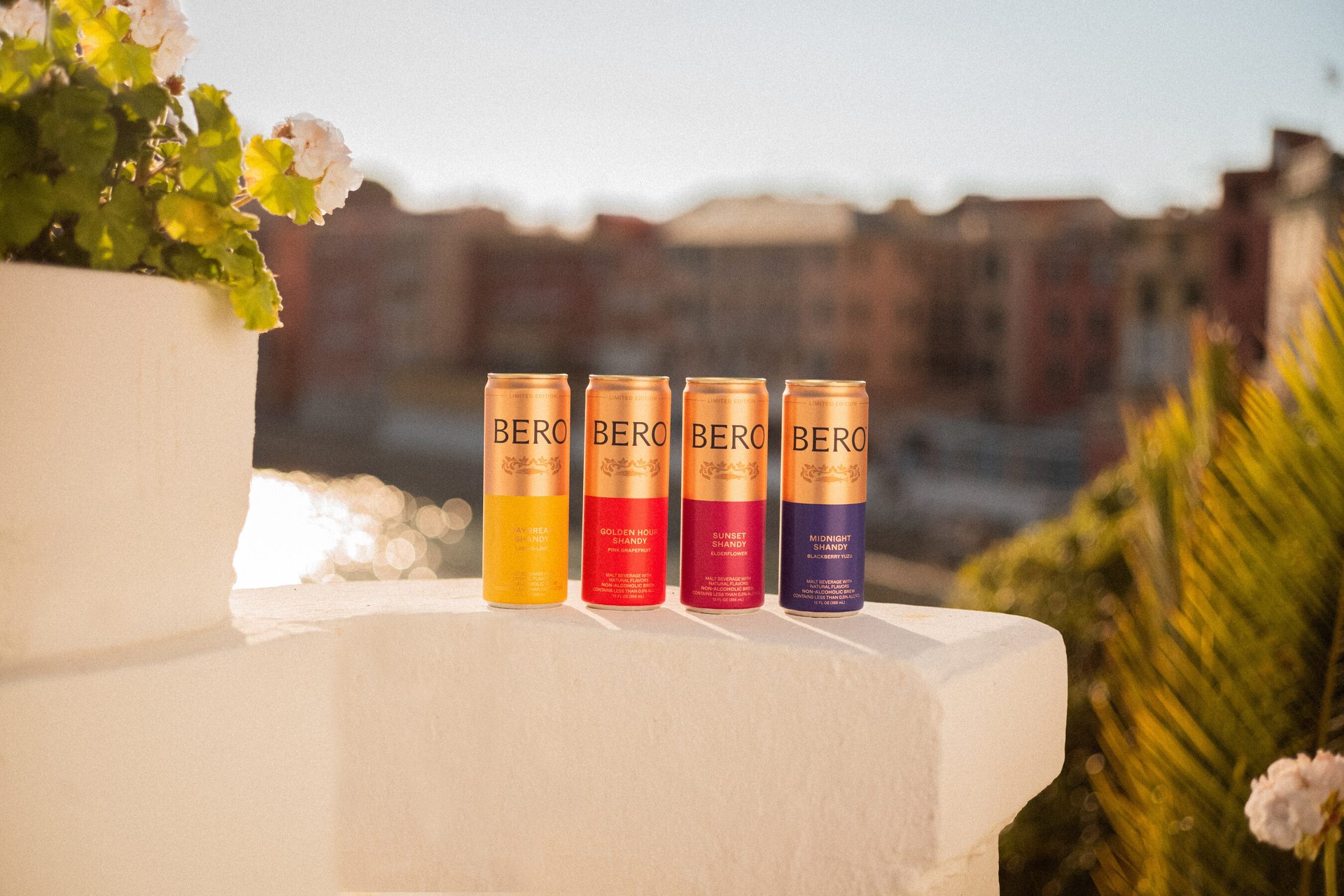
(Image courtesy of BERO)
Despite challenges to the segment and its sub-segments, analysts highlight the brands that have benefited the category.
“Ironically, the market has been more driven by brands than by segments,” S&D Insights’ Sudano said in Beverage Industry’s March issue. “Within super-premium, Michelob Ultra has been the standout. Separately, not many brands have performed well in the segment. Within premium, you can point to Coors Banquet but again no brands of scale outside Banquet have grown; within sub-premium it is Busch Light, within imports brands beginning to hit scale like Pacifico and Victoria, within craft it is a selection of strong regional brands not expanding too far from home with a point of difference like Tree House and Maine Brewing and a few national brands that have experienced modest growth like Voodoo Ranger and Sierra Nevada. Finally, within FMBs, the improving trends leading to growth for White Claw and brands like Cayman Jack as RTD spirits continue to dominate alternative space.”
Meanwhile, craft beer continued to face hurdles. NIQ’s Theriault noted this in Beverage Industry’s March issue.
“Craft is facing a lot of struggles, and they have been for the past I would say three to four years post COVID-19 and everything like that, especially with the introduction of ready-to-drink products,” she said. “So, there’s fewer products on the shelf because retailers are swapping them out for faster moving products. That’s definitely had an impact as well as the relevancy, I think, with that craft consumer.”
Despite these challenges, craft brewers are showing that the creativity that helped build up the category will be valuable in turning the segment around.
The Boulder, Colo.-based Brewers Associations’ (BA) released in December The 2025 Year in Beer insights. Among the trends of 2025 that the BA identified as influencing craft beer, the association noted new approaches to hospitality and growth in low ABV products.
“In addition to non-alc’s continued growth streak, there has also been significant expansion in the low- to mid-strength segments (typically defined as [less than] 4% ABV),” it wrote. “Brewers are seeking to capture more occasions that call for great flavor without the buzz.”
As domestic beer brands look to stabilize their performance, analysts are mixed on how they see the segment and overall category performing in the year to come.
“We expect to continue to see the American beer segment contract, as consumer preferences shift to other beer styles,” Circana’s Toenies said in Beverage Industry’s March issue. “However, we expect to see the American beer super-premium segment continue to grow in 2026, driven by Michelob Ultra.”
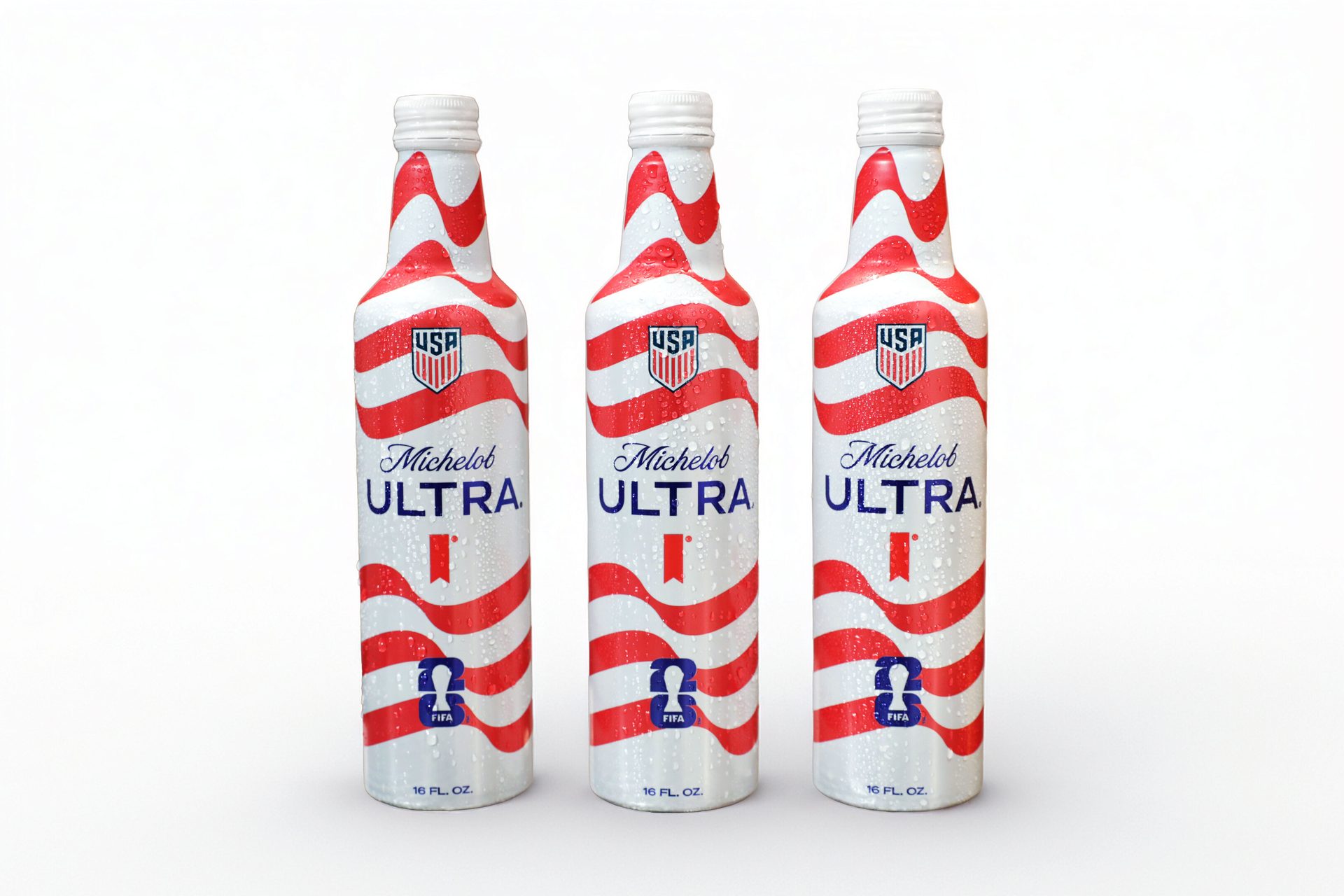
(Image courtesy of Anheuser-Busch)
Other beer segments (import, beer seltzer centric, flavored malt beverages and assorted) have been challenged in 2026 as well. Import beer dollar sales were $11.4 billion, down 1.4%, while case sales were down 2.8% for the 52 weeks ending April 19.
“Imports for most of the year were doing pretty well, staying above the line, the zero line, but toward the end of the year they did start to dip off, and there were some really tough comps faced against 2024,” Theriault said in Beverage Industry’s March issue.
For imported beer overall, Theriault noted that premiumization is driving performance and innovation, which could benefit the segment.
“I think it's really helping,” she said. “It especially ties back to moderation too, where people are drinking better but might be drinking a little bit less, so they’re premiumizing the experiences that they are having.”
What also benefits imported beer brands is the authenticity that’s associated with these products.
“Authenticity, I think it really rings true among the consumer that enjoys these products,” Theriault said in Beverage Industry’s March issue. “I do think having that brand heritage is really important for anybody drinking a Mexican lager or imported beer.”
S&D Insights’ Sudano echoed similar sentiments, while calling attention to additional trends the segment has embraced.
“An immerging trend back toward authenticity is having a positive impact on a brand such as Guinness while flavor and non-alcoholic beer offerings remain a focus around imported beer brands,” he said.
Beer seltzer centric dollar sales were $3.1 billion, a 3.2% decrease, with case sales down 5.9%. Flavored malt beverages (FMBs) saw dollar sales of $4.5 billion, a 4% decrease, with case sales down 6.4%.
S&D Insights’ Sudano noted that for hard seltzers, the deceleration of category leader White Claws decline, serves as positive sign, but remains cautious about FMBs performance.
“Hard seltzer declines moderated throughout the year as White Claw stabilized and began to grow again at the end of 2025,” he said in Beverage Industry’s March issue. “Other FMB segments remained under pressure as spirit RTDs expanded into their space such as teas, lemonades and tequila-inspired cocktails, while Cayman Jack bucked the trend to growth in [the] tequila-flavored FMB space. Although smaller, Clubtails cocktails malt-based drinks also experienced growth in the FMB space.”
Noting that hard seltzers hit its peak approximately three years ago, while FMBs likely hit their peak last year, NIQ’sTheriault explained that brands now are in a position of figuring out how to capture their “portion of the pie” given the state of declines.
“It was really easy for everybody to grow when hard seltzers were booming, but now that everything's sort of contracting, there’s definitely changes in share of the pie there that are happening,” she said in Beverage Industry’s March issue.
From a smaller base, assorted sales totaled $11.5 million, a 27.2% decrease, with case sales down 28.9%.
Despite these challenges to the U.S. beer market, Circana’s Toenies shared there have been bright spots within the category such as non-alcohol beer.
Toenies said in Beverage Industry’s March issue he expects this trend to continue to impact the overall beer market.
“Beer market performance trends show that consumers continue to moderate their alcohol consumption, whether it be by shifting their consumption to ‘lighter’ or non-alcoholic beer or decreasing their alcoholic intake altogether, as we’re seeing with younger Gen Z consumers,” Toenies said.
For the 52 weeks ending April 19, non-alcohol beer sales were $632.4 million, a 22% increase, with case sales up 23.7%.
S&D Insights’ Brian Sudano, also highlighted the positive impact from non-alcohol (NA) beer.
“The moderation message is reasoning as RTDs across spirits and wine drive volume in each beverage alcohol category and NA beer gains in market penetration,” he said in Beverage Industry’s March issue. “Beer is leaning into a moderation message as the original product for consumers looking to moderate their consumption.”
NIQ’s Theriault also noted how non-alcohol is serving the beer market in dual capacity.
“It's really two-fold,” she said in Beverage Industry’s March issue. “I think that there are some that might not choose beer for an occasion. … I would think about it more from an occasion standpoint. We’re not losing, despite all the conversations around people not drinking and things like that; we’re not seeing like a mass exodus of consumers from the beer drinking world.
“But I think that there are certain occasions where non-alcohol beer is keeping that that drinker really close to a brand or even to the beer category,” Theriault said. “And then I do think that there are some consumers that might not be beer drinkers that have tried out non-alcohol beer and they do like it.”
These factors are all contributing to high expectations for non-alcohol beer in the year to come.
“It's still going to be one of the strongest growth drivers by far,” Theriault said. “Double-digit growth, I would still expect to see from this category. Over the past few years, it's been you know, 35%, 30-25%, 20%. We slowly see it stepping down as the category expands in size, obviously on a larger base, [because] it’s harder to maintain those big growth numbers, but I still foresee it growing double digits easily with even just more of a spotlight on it.”
S&D Insights’ Sudano also prognosticated double-digit growth for non-alcohol beer, but raises some concerns about the deceleration.
“At roughly 1.3% of total beer and with the entry of many major beer brands into the NA space, distribution will continue to expand, and awareness levels grow,” he said in Beverage Industry’s March issue. “This positions the space to grow in 2026 at double digits again. A concern is that despite all the attention and expanding spend and distribution in 2025, the category only grew 20%.
“This leads to a couple questions: a) is the category losing steam; b) is recruitment of new consumers slowing; and c) are we hitting a saturation point,” Sudano continued. “Only time will tell if one or more of the answers to these questions is [this] year.”
NIQ’s Theriault acknowledged the beer market’s embracement of non-alcohol as a bright spot to the category, but also points to the premiumization of the beer category overall.
“The way that they've approached both the premium mindset of the consumer, and I would say the flavor piece that goes with it,” she said. “RTDs or those like flavored malt beverages and hard seltzer products definitely came into the repertoire of the shopper and the consumer, and those come with a premium price. So, beer found this opportunity that value goes beyond price point a little bit, and super-premium beer specifically is finding some success with the consumer just offering a better tasting product with the right claims on the package that somebody might be seeking, whether that’s calorie or carb call outs, things like that.
“Then we see flavor come through in the craft beer space, and that’s a space that's definitely facing declines at the total level,” Theriault continued. “But when we think about flavors within it, some brands have really found success there, combining it with like a high ABV format.”
Flavors, however, have aided the performance of the hard cider segment.
“Cider did end up growing,” Theriault said in Beverage Industry’s March issue. “It was up 1.6% versus a year ago, and while that growth was relatively small, I think that it's had some impact from the flavor trend that's happening.
“It is a more indulgent offering for some consumers,” she continued. “We’ve also seen light ciders come through where they still get that full flavor, but it’s better for you to position with lower calories, half the calories of a regular cider and maybe lower ABV, too.”
For the 52 weeks ending April 19, hard cider dollar sales were $515.3 million, a 3.6% increase, with case sales up 3.2%.
Adapting to these changes is crucial for beer manufacturers to maintain long-term performance. In Chicago-based Mintel’s 2025 report “Beer – US,” authored by Juila Mills, food and drink analyst, the report highlights beer’s reach with beverage alcohol consumers.
“Despite cost concerns and evolving consumer preferences toward alcohol, the U.S. beer market will reach $181 billion by 2030,” the report states. “Growth is driven by demand for imported and non-alcoholic options, even as traditional domestic and craft segments face declines. Brands must adapt to economic pressures and changing tastes to remain competitive.”
Among those trends noted in the report are younger legal drinking age consumers’ interest in variety, flavor innovation and options that fit more occasions as well as the sober-curious movement. To aid the beer market’s performance, Mills wrote of the need to evolve beyond conventional approaches.
“To stay relevant, beer brands should move beyond traditional stereotypes and occasions, embracing inclusive marketing, new flavors, and experiential packaging,” the report states. “Success will depend on meeting emotional needs for belonging and connection, as well as offering products that appeal to diverse demographics and emerging social trends.”